
Gary’s Story
I’ve owned eight Gibson ES-335s over the years, but until this guitar I had never owned one built specifically around 1959 specifications. The model was evolving quickly from 1958 through 1961, and many players and collectors particularly covet the 1959 neck.
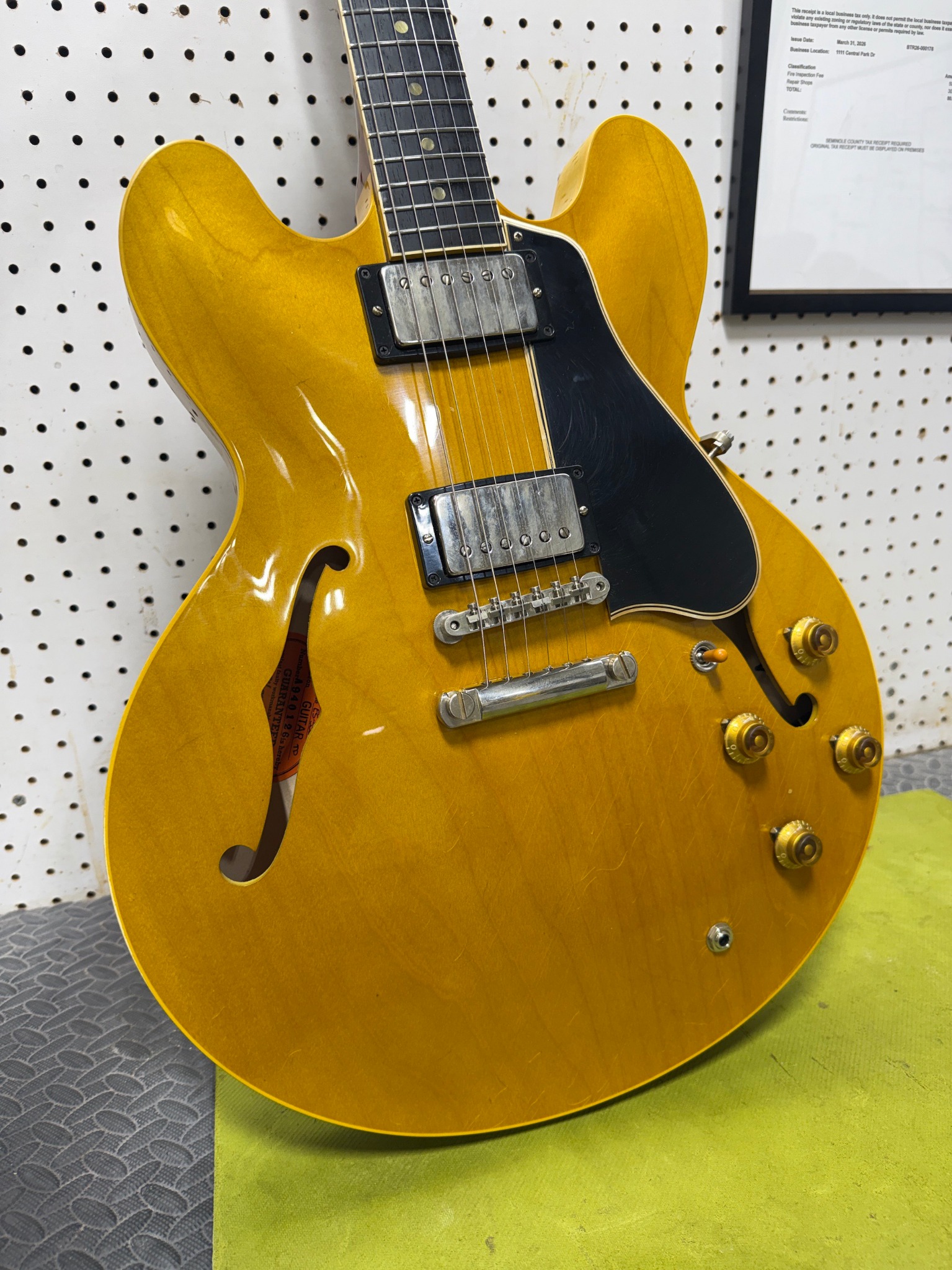
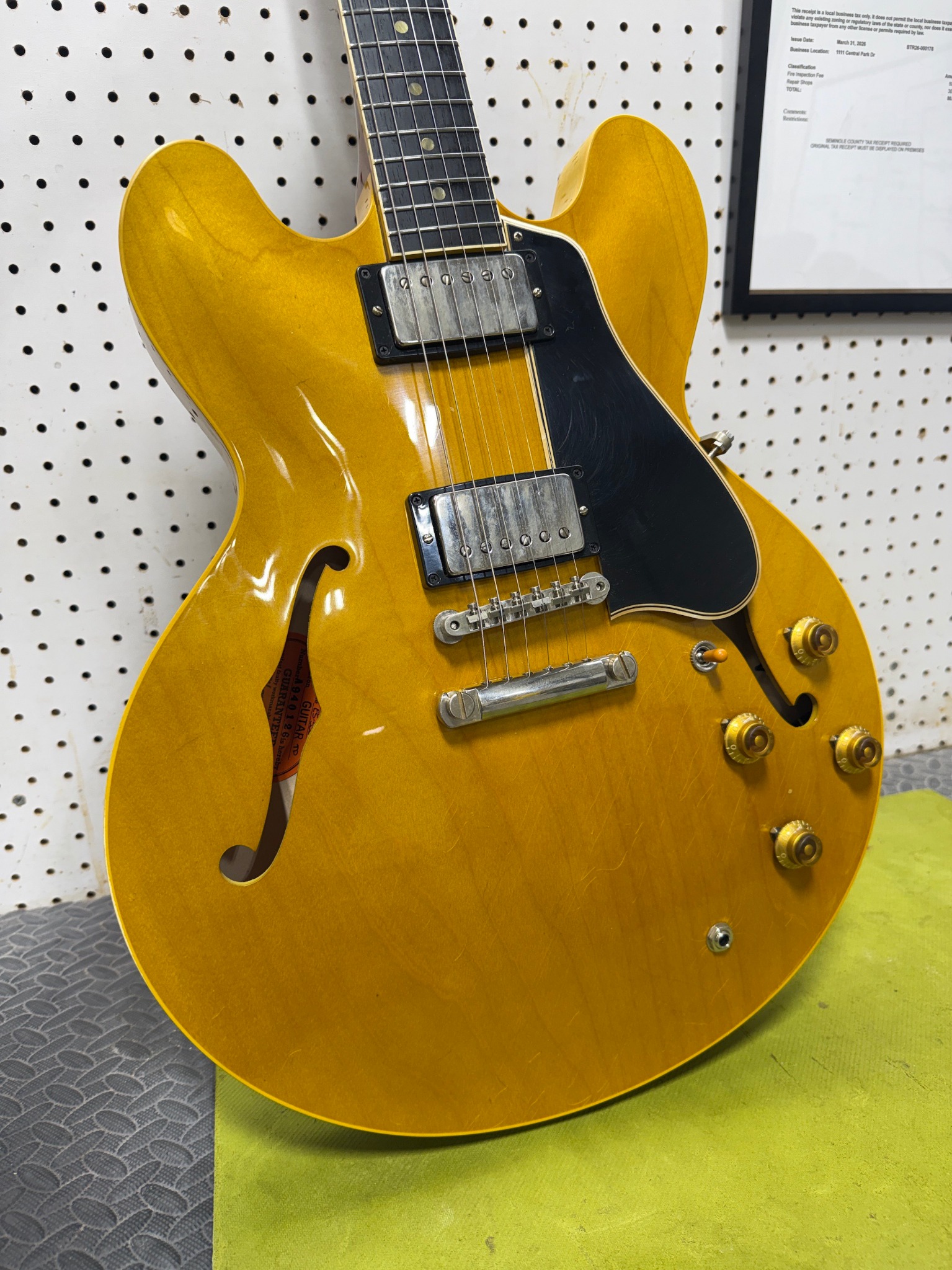
Only 71 natural-finished — or Blonde — ES-335s were reportedly produced in 1959, compared with 521 Sunburst examples. An original Blonde ’59 is now prohibitively expensive. I already own an original 1960 Cherry stop-tail and a Warren Haynes ES-335, so I set out to find the missing chapter: a great Blonde ’59.
I didn’t simply want a modern 335 that looked old. I wanted the things underneath the appearance that I believe contribute to the experience of an exceptional vintage Gibson: the fingerboard, finish, hardware, wiring, pickups, neck feel and setup.
Historic Makeovers replaced the Indian rosewood board with selected reclaimed old-growth Brazilian rosewood, cut to vintage specifications, inlaid, fretted and bound by hand, and attached using hot hide glue. The finish uses their custom nitrocellulose lacquer approach, and I chose light broken-in aging — slightly more than closet classic, but not abused.
Virtually all of the hardware was replaced with vintage-oriented RetroSpec parts and aged to match: St. Helens bridge and tailpiece, pickup rings, knobs, Catalin vintage-style toggle tip, cellulose-nitrate dots, rolled truss-rod cover, backplates and aged nickel hardware. The electronics use CTS 500K pots and Luxe Bumblebee capacitors.
The Ballestone P.A.F. replicas were especially important. I wanted low-to-medium output, plain-enamel wire, vintage-style Alnico, moderate coil mismatch, strong upper-mid harmonic content, excellent note separation and no excessive bass. The neck measures 7.5kΩ and the bridge 8.3kΩ.
A 335 is a different environment from a Les Paul. The semi-hollow body magnifies low-end bloom, compression, upper-mid openness and note separation. My goal was maximum old-Gibson-335 character: woody, open, articulate and dynamically responsive — big without sounding thick.
The final setup was done by Steve Vai’s guitar tech for low action. In my opinion, this approach produced something far more meaningful to me than a reissue focused primarily on visual aging.
I also have an unusual reference point: I own an original 1960 stop-tail ES-335. I’m not pretending a modern guitar becomes a 65-plus-year-old Gibson because it has been aged. I can pick up the real thing. What I wanted was a modern ’59 recreation incorporating as many of the materials, construction details, tactile qualities and sonic characteristics I value as reasonably possible.
This guitar does that exceptionally well.**
After years of looking, I finally have the 335 that had been missing from my collection: a great Blonde ’59.